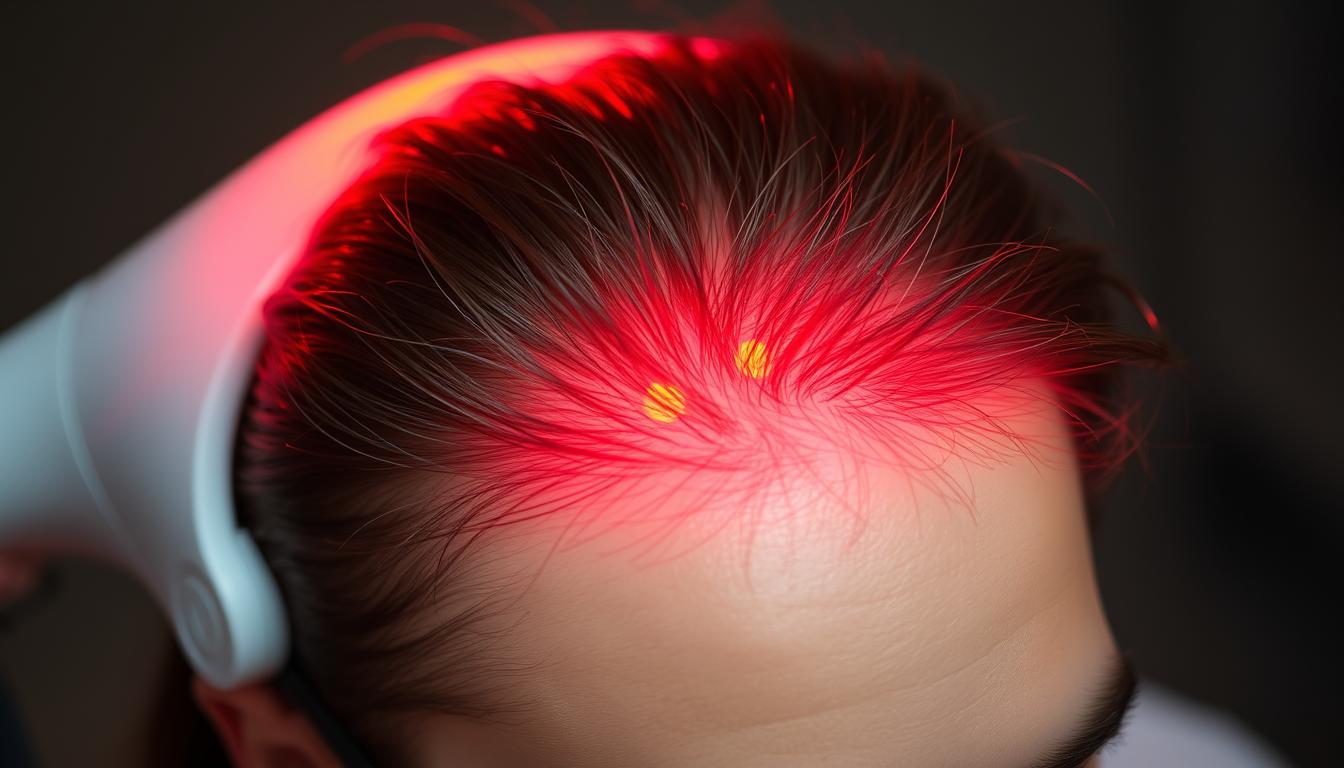
Is your hair looking thinner these days? You’re not alone. Many people are searching for a gentle way to bring back their hair’s natural thickness without resorting to harsh chemicals or costly procedures.
You must try red light therapy. This innovative treatment uses specific wavelengths of light to potentially revitalize tired hair follicles, and it’s gaining popularity as a convenient, at-home solution for hair thinning.
Let’s talk about the science behind red light therapy for hair growth. We’ll show you what the evidence says about its effectiveness, explore practical device options, and give you an honest look at what it can and can’t do. Whether you’re just starting to notice thinning or have more advanced concerns, we’ll help you decide if red light therapy is the right choice for your hair journey.
Big Takeaways
- Red light therapy might help hair grow by waking up hair follicles.
- You can do this at home with safe, FDA-cleared devices.
- Studies show it works for some types of hair loss.
- You’ll need to use it consistently for a few months to see results.
- It’s best for early thinning, not complete baldness.
- Few side effects make it a safer option than harsh chemicals.
Understanding Red Light Therapy and Its Promise for Hair Restoration
If you’re looking for ways to restore your hair, red light therapy might be the answer! It’s a promising, non-invasive option for those dealing with thinning hair or baldness. This innovative treatment uses special light wavelengths to target your hair follicles right down to the cellular level.
Many researchers and people like you are paying attention to red light therapy because it’s a gentle approach. Unlike surgery or harsh chemicals, it works with your body’s natural processes. The best part? It’s simple, potentially effective, and comes with minimal side effects.
What Exactly Is Red Light Therapy?
Also known as low-level light therapy, red light therapy uses specific red and near-infrared light wavelengths to kickstart biological processes. Basically, you expose your scalp to concentrated light energy for a set amount of time. It’s completely painless and you won’t need any recovery time afterward.
Think of it like giving your hair follicles a little energy boost! The light energy goes right into your hair follicles and the surrounding tissue, helping them work better. The light penetrates your scalp without generating heat or damaging your skin.
You can find this treatment in professional clinics or use at-home devices. The main difference is usually the power of the device and how long you need to use it. Both aim to deliver therapeutic light doses to encourage hair growth.
The Science of Light Wavelengths
For red light therapy to work, it needs the right light wavelengths. Studies show that wavelengths between 630 and 670 nanometers are best for hair restoration. These specific wavelengths can get deep into your scalp without causing any tissue damage.
Different wavelengths interact with your cells in unique ways. Red light wavelengths boost your cells’ energy production through a process called photobiomodulation. This fancy term just means light energy triggers helpful changes in how your cells function.
Here are the wavelengths that show the most promise for hair growth:
- 660 nanometers: Great for cell stimulation and energy.
- 630 nanometers: Good for improving blood flow.
- 670 nanometers: Helps reduce inflammation in hair follicles.
- Near-infrared (810-850nm): Penetrates deeper for a more comprehensive treatment.
Choosing the precise wavelength ensures you get the most benefit. Wavelengths that are too short or too long might not give you the same hair growth results. This is why not just any light source will work for hair restoration.
How Red Light Differs from Harmful UV Radiation
Worried about light exposure because of UV rays? Don’t be! Red light therapy is completely different from harmful UV radiation. Understanding this difference can help ease any safety concerns you might have.
UV radiation (280-400 nanometers) can damage skin cells. But red light therapy uses much longer, safer wavelengths (630-850 nanometers). These longer wavelengths won’t cause the DNA damage associated with UV exposure.
Here are the main differences:
- Wavelength range: Red light uses 630-850nm; UV uses 280-400nm.
- Skin penetration: Red light safely penetrates without cell damage.
- Heat production: Therapeutic red light produces very little heat.
- Cancer risk: There’s no increased cancer risk with proper red light therapy use.
Instead of harming cells, the therapeutic nature of red light actually supports their health. Photobiomodulation boosts cell function rather than causing harmful changes. This crucial difference makes red light therapy a safe option for regular use.
Quality manufacturers of professional devices rigorously test their products to make sure they only emit beneficial wavelengths. They filter out any potentially harmful light frequencies. This careful engineering ensures the treatment harnesses light’s healing power without the risks.
How Does Red Light Therapy Help Your Hair Grow?
When red light hits your scalp, it sets off a chain reaction in your cells. This can help transform weak hair follicles into healthy, growing ones! Scientists have found several ways this non-invasive treatment helps people with hair loss. These processes all work together, which is why using red light therapy consistently over time gets you the best results.
Powering Up Your Hair Follicles
Every cell has tiny powerhouses called mitochondria, and they’re super important for healthy hair. Red light therapy targets these “cellular engines” with specific wavelengths of light, boosting their energy production. When mitochondria get this light energy, they create more ATP (adenosine triphosphate), which is like the fuel for your cells.
This extra energy gives your hair follicles what they need for strong, healthy growth cycles. Weak follicles often don’t have enough energy to produce hair normally. By supercharging the mitochondria, red light therapy can help your follicles get back to producing strong, healthy strands.
This happens through a process called photobiomodulation. Light particles interact with an enzyme, triggering reactions that boost your cell’s metabolism. This energy surge can spread throughout the entire hair follicle.
Boosting Blood Flow to Your Scalp
Improved blood flow is another important way red light therapy helps hair grow. It seems to encourage the formation of new blood vessels and enhances circulation in treated areas. Better blood flow means your hair follicles get more vital nutrients and oxygen.
Think of your blood circulation as the delivery system for everything your hair needs to thrive: vitamins, minerals, proteins, and oxygen. When circulation improves, this delivery system becomes much more efficient.
Better circulation also helps clear away waste products that can build up around your hair follicles, creating a healthier environment for them to rejuvenate. Studies even suggest that improved blood flow in the scalp can start within minutes of red light treatment.
Calming Inflammation and Extending Growth
Chronic inflammation often contributes to hair loss by messing with normal growth cycles. Red light therapy has anti-inflammatory properties that can help calm an irritated scalp. By reducing inflammation, the treatment creates a better environment for healthy hair to grow.
The anti-inflammatory effects work in a few ways. Red light can reduce the production of inflammatory compounds while increasing beneficial anti-inflammatory ones. This helps bring balance back to your scalp’s immune response.
When inflammation goes down, your hair follicles can focus their energy on growing instead of fighting stress. This leads to stronger follicle rejuvenation and can even help prevent early hair loss in otherwise healthy follicles.
Stimulating Hair’s Command Center
At the bottom of each hair follicle is a special group of cells called the dermal papilla. These cells are like the command center for hair growth, dictating when follicles move through different growth phases. Red light therapy appears to stimulate these key cells directly.
When dermal papilla cells receive red light energy, they may produce more growth factors and signaling molecules. These substances help coordinate the complex process of hair regrowth by telling other follicle cells when to start, continue, or pause growth.
Stimulating these dermal papilla cells is one of the most targeted effects of red light therapy. By influencing these “master regulators,” the treatment may help reactivate dormant follicles and strengthen the ones you already have.
Making Hair Grow Longer
The anagen phase is when your hair actively grows, usually lasting 2-7 years for scalp hair. During this time, follicles constantly produce new hair cells, leading to longer, thicker strands. Red light therapy may help extend this important growth phase.
By supporting the cellular processes that keep the anagen phase going, red light treatment could allow your hair to grow for longer periods before entering its resting phase. This means individual hairs have more time to reach their full length and thickness.
The benefits of longer anagen phases add up over time. As more of your follicles spend longer periods actively growing, your overall hair density and thickness will improve. This is why getting the best results from red light therapy for your hair takes patience and consistency.
Does Red Light Therapy Really Work for Hair Growth?
It’s smart to question whether new treatments live up to the hype, and red light therapy for hair loss is no different. While research shows real promise, it’s important to understand what the science actually says so you know what to expect. Scientists are still studying this technology, and the results paint a clear, though not always simple, picture.
Many clinical trials show noticeable improvements in hair density and thickness. But remember, results can vary quite a bit from person to person. Factors like how consistently you use the treatment and how severe your hair loss is play a big role.
What Do Experts Say?
The medical community largely agrees that red light therapy is a valid treatment option for certain types of hair loss. Most dermatologists and hair specialists (trichologists) acknowledge its potential benefits, while also stressing the importance of realistic expectations.
Recent comprehensive reviews of studies confirm statistically significant improvements in hair count and thickness. The general consensus is that red light therapy works best when it’s part of a complete hair restoration plan, rather than being your only solution.
“Red light therapy represents a safe, non-invasive option that can complement traditional hair loss treatments, though patients should understand it’s not a miracle cure.”
More and more, professional medical organizations are including red light therapy in their treatment guidelines. This growing acceptance reflects the solid evidence supporting its effectiveness for specific hair loss conditions.
What Do the Studies Show?
Clinical trials consistently show measurable improvements in hair growth. For example, a major 26-week study found that participants saw an average 35% increase in hair density compared to those who didn’t use the therapy.
Another important study focused on androgenetic alopecia (pattern baldness) and showed impressive results. Participants using red light therapy three times a week had a 37% improvement in hair count after just 16 weeks.
The most extensive research involved 128 participants and revealed:
- 93% reported better hair quality
- 85% experienced increased hair thickness
- 64% noticed significant improvements in hair density
- No serious side effects were reported.
These studies used precise methods to measure hair growth, including counting hairs and taking photos. The consistent positive results across different research groups really strengthen the case for red light therapy.
Who Benefits the Most?
Red light therapy works best for people with early-stage hair loss. If you’re just starting to notice thinning or have mild pattern baldness, you’ll likely see better results than someone with advanced hair loss.
Men and women with androgenetic alopecia (genetic hair loss) are the main group who benefit. This condition responds well to how red light therapy stimulates cells. Younger patients generally see more dramatic improvements.
You might be an ideal candidate if you have:
- Recent hair loss (within 2-3 years)
- Thinning rather than completely bald spots
- Good overall health and a healthy scalp
- Realistic expectations about what the treatment can do
- The commitment to use it consistently
Women experiencing hair loss after childbirth or due to hormonal changes often see great results too. Since it’s gentle, red light therapy is suitable for sensitive scalps and those going through hormonal shifts.
What are the Limitations?
It’s important to be realistic: red light therapy can’t bring back hair in areas that are completely bald. It works by stimulating existing hair follicles, not by creating new ones from scratch.
You’ll usually start to see noticeable results after 12-16 weeks of consistent use. Some people might need six months or even longer for significant improvements. So, patience and consistency are key!
Here are some important limitations to keep in mind:
- It’s less effective for advanced baldness.
- You’ll need to keep using it to maintain results.
- Individual results vary a lot.
- It’s not effective for all types of hair loss.
Red light therapy works best when you use it alongside other proven hair loss treatments. Don’t expect dramatic overnight changes, as that can lead to disappointment. Also, remember that quality at-home devices can be a significant investment, though they often end up being more economical than continuous professional treatments.
Types of Red Light Therapy Devices for Home Use
Want to try red light therapy for hair growth at home? Great news: there are now many devices to choose from, bringing professional treatment right to you! Each type has its own pros and cons, so let’s break them down to help you pick the best one.
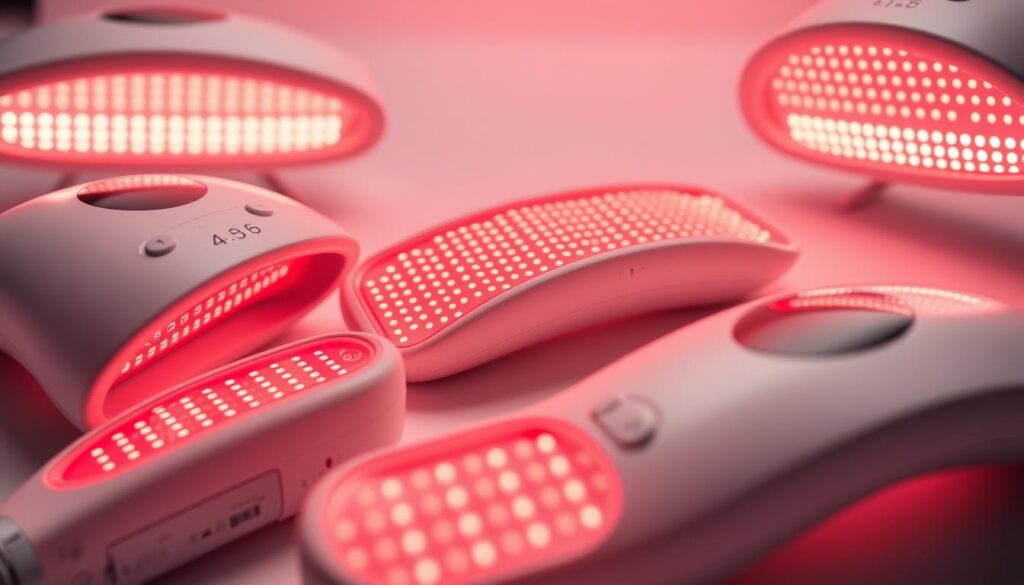
Helmet and Cap Devices for Full Scalp Coverage
You’ll find several options for at-home red light therapy. Helmets and caps offer full scalp coverage with lots of LEDs, perfect for widespread thinning, and they’re hands-free. However, they can be pricey and a bit bulky.
For a more targeted approach, headbands are lighter, with fewer LEDs, and are great for receding hairlines or thinning at the crown. They’re adjustable but cover a smaller area than helmets.
If you prefer precision, combs and brushes integrate LEDs directly into familiar grooming tools. These handheld devices are excellent for specific thin spots and are easy to use, though you’ll need to actively move them around for broader coverage.
Finally, panels and wands offer versatility. These can treat not just hair loss but also other body areas. Panels are flat, while wands are more compact. They’re a good value if you want multiple light therapy benefits, but they require more hands-on time and careful positioning for consistent scalp coverage.
What to Look for When Buying
When choosing a device, consider a few important things. Make sure it uses theright wavelength (630-670nm), especially 660nm, as this is proven best for hair follicles. Also, check the power (5-15 mW/cm²); higher power often means quicker treatments, though it might cost more.
While more LEDs can mean better coverage, LED quality is very important. Look for devices with FDA clearance, which means they meet safety and effectiveness standards.
Lastly, think about comfort, battery life, and portability.Since treatments can last 20-30 minutes, comfort is essential for consistent use. Decide if you prefer the flexibility of a battery-powered device or the consistent power of a corded one. If you travel a lot, a more compact design might be more convenient.
Maximizing Results: Usage Guidelines and Combination Treatments
If you want to get the best results from red light therapy for your hair, it’s not just about turning on the device; you need a smart plan. Following proper guidelines, being consistent, and knowing how to combine treatments safely will make a big difference.
How Often and How Long to Treat
Most experts suggest using red light therapy 3 to 4 times a week. This gives your hair follicles time to respond without overstimulation. Daily use isn’t necessarily better—your cells need a break!
Sessions usually last 15 to 30 minutes, depending on your device. Helmets might need a bit longer (25-30 mins) due to their lower power, while stronger handheld devices might only need 10-15 minutes. It’s smart to start with shorter sessions (10-15 mins) for the first couple of weeks to let your scalp adjust, then gradually increase. This helps avoid irritation.
Consistency is Necessary
When it comes to red light therapy, consistency beats intensity. Missing a session now and then is fine, but irregular use really limits effectiveness. Your hair follicles thrive on steady, predictable stimulation.
Most people start seeing changes after 3 to 4 months of consistent use, but significant improvements often take 6 to 12 months. This means you need patience and dedication. Find a routine that works for you—many people do it while watching TV or reading. Setting reminders can also help you stick to it.
Keeping Your Results
Once you get the hair growth you want, maintaining it is very important. Most users can drop down to 2-3 sessions per week to keep their gains, and some even find once a week is enough. Pay attention to your hair; if you notice any regression, just increase the frequency back to your original schedule temporarily. Think of it like exercise – if you stop, you’ll gradually lose the benefits.
Combining Treatments
Wondering if you can use red light therapy with other hair loss treatments? Good news: it often works really well together!
Many people find that adding red light therapy to their Minoxidil routine boosts results. It seems the improved blood flow from the light might help the Minoxidil penetrate better. And if you’re taking Finasteride, that’s also potentially a good pairing, as they tackle hair loss in different ways. Just be sure to chat with your doctor before combining red light therapy with any prescription medications.
You can also safely pair it with natural options like a good scalp massage, essential oils, or supplements. Some people even build a full routine with several gentle methods for the best possible outcome.
Here’s a quick look at compatibility:
| Treatment Combination | Compatibility Level | Potential Benefits | Considerations |
|---|---|---|---|
| Minoxidil + Red Light | High | Enhanced absorption and circulation | Apply minoxidil after light therapy |
| Finasteride + Red Light | High | Addresses multiple hair loss pathways | Requires medical supervision |
| Scalp Massage + Red Light | Excellent | Increased blood flow and relaxation | Perform massage before treatment |
| Hair Transplant + Red Light | Good | May support healing and growth | Wait for surgeon’s approval post-procedure |
Safety and Side Effects
Generally, red light therapy is quite safe when used correctly. The most common thing you might notice is some mild scalp irritation or sensitivity, especially when you first start. But don’t worry, this usually goes away as your skin gets used to it.
A few people also experience temporary headaches after their first few sessions. If this happens, try shorter treatment times or make sure your device is positioned correctly. If the headaches stick around, just reduce how long or how often you treat.
Protect your eyes! Never look directly at the LED lights. Most good devices come with special glasses or shields. If you know you’re sensitive to light, it’s a good idea to talk to a doctor before starting.
Also, if you’re pregnant or nursing, or if you’re on any medications that make you sensitive to light, please consult your doctor first, as there isn’t enough research on safety during these times.
If you ever experience persistent scalp irritation, unusual hair shedding, or anything else concerning, stop treatment and chat with a healthcare professional. While rare, some people might have sensitivities that make red light therapy not the right fit for them.
Your Next Step to Fuller Hair
What’s the bottom line on red light therapy for hair growth? It’s a pretty promising, gentle way to deal with thinning hair. The science suggests it really does help by giving your hair follicles a much-needed boost, especially if you’re catching hair loss early.
To see the best results, you’ll need to be consistent with your treatments. The good news is, there are plenty of at-home devices to choose from, and it plays well with other hair loss solutions. Plus, it’s generally safe with few side effects. If you’re looking for a way to get thicker, fuller hair, red light therapy is definitely worth considering as part of your routine.
Common Questions about RLT for Hair Growth
How long until I see results?
You might notice small changes in 3-4 months, but big improvements usually take 6-12 months of regular use. Patience is the key!
What’s the best light wavelength for hair?
Look for devices that use light between 630 and 670 nanometers, especially around 660nm. This range works best for stimulating hair cells.
Does it help with male (or female) pattern baldness?
Yes, it can be quite helpful, especially if your hair loss is mild to moderate. It works best as part of a complete hair care plan, not usually by itself.
How often should I use it?
Most experts recommend 15-20 minute sessions, 3-4 times a week. Being consistent with this schedule is more important than using it every day.
Can I use it with other hair loss treatments?
Absolutely! It often works well with things like minoxidil, finasteride, special shampoos, or scalp massages. Combining treatments can boost your results, but always check with your doctor first.