
Being a top athlete isn’t just about lifting weights and running anymore. Today’s champions use new techniques that combine mind and body for amazing results. Did you know that 93% of Olympic athletes now use mental training along with their physical workouts?
Using red light therapy and mental pictures together is a powerful mix that’s changing how we reach fitness goals. Top athletes in sports like swimming and basketball use these methods to get an advantage over others.
This approach works so well because it helps in two ways. One part helps your body’s cells heal and muscles work better. The other part helps you focus more and builds new brain connections for smoother movements. Together, they create a strong team that makes both parts even more effective.
The great thing about these techniques is that anyone can use them. You don’t need fancy equipment to add them to your routine. Whether you’re training for a marathon or just want to improve your weekly gym sessions, you can change these methods to fit what you need.
Let’s look at how these new ideas can change your training. We’ll show you the science behind them and share real stories of success. If you want to get better at what you do, you must start with understanding both the physical and mental sides of getting ready.
The Power of Combining Mental and Physical Training Techniques
To be a top athlete, you need to train both your mind and your body. Just lifting weights or running fast isn’t enough anymore. Today, sports science shows that mixing smart mental tricks with physical training makes you much stronger. It’s a powerful combination that can boost your performance way beyond old methods.
This new way of training sees your body and mind as one connected system. When you train both together, you get much better results than training them separately. It’s a complete way to train that covers everything you need to perform well in sports.
The Big Change in Sports Training
How athletes get ready for competition is completely changing, and it’s a big deal! This shift isn’t just for pros; it’s also happening in college sports, with amateur athletes, and even for fitness buffs who want the best results from their workouts.
Adding brain and mind elements to physical training is a major step forward in sports science. Research in the Journal of Sports Sciences found that athletes who use mental techniques alongside physical training improved their performance by 12-15% more than those who only did physical training.
This change is shaking up how training is done in many sports. For example, basketball teams now use visualization before practice to get better at shooting. Swimming programs use red light therapy to recover faster after tough training. Even fighters use mental focus to stay calm under pressure.
The numbers don’t lie. A 2022 study looked at top sprinters and found that those who used both mental and physical training improved their reaction times by 8.3%. The group that only used traditional methods saw just a 3.1% improvement. These clear differences mean a real advantage in competition.
Why Elite Athletes Are Turning to These Methods
The best athletes in the world know that to get an edge, you have to look beyond the usual ways. Michael Phelps, the Olympic gold medalist, famously used visualization in his training. He’d mentally swim every race, even imagining problems that might pop up, before he even got to the starting block.
NBA star LeBron James uses both red light therapy and visualization for his recovery and to get ready. He recently said, “The mental side of performance is just as important as the physical. When I prepare both my body and mind, I feel unstoppable.”
Tennis star Serena Williams says her mental preparation is a big reason for her long career and success. Before a match, her routine includes special visualization exercises that help her focus better during key moments.
The difference between good and great often comes down to the six inches between your ears. Physical training gets you in the game, but mental training helps you win it.
It’s not just a few athletes. A survey found 87% of Olympians use mental training, and 62% use recovery methods like red light therapy.
Science backs this up:
- Visualization lights up the same brain parts as real practice, giving you a mental boost without the physical stress.
- Red light therapy helps your cells create energy, reduces swelling, and repairs tissues—all key for recovery and performance.
The best part? These methods are for everyone! You don’t need to be an elite athlete to use them. As sports science grows, combining mind and body training is becoming the new standard for anyone wanting to reach their full potential. The proof is clear: training your mind and body together truly transforms your performance.
Understanding Red Light Therapy (RLT)
Athletes are increasingly using Red Light Therapy (RLT) to boost their training and recovery. What was once only for doctors is now available to athletes everywhere who want an edge.
RLT mixes cool science with real-world use. Unlike many questionable supplements, RLT has solid research showing it works for athletes. Let’s see why this technology is so promising for your fitness journey.
What Is Red Light Therapy?
Red Light Therapy, also called photobiomodulation, uses specific red and near-infrared light waves that go into your skin and tissues. Unlike UV light, which can harm cells, these safe light waves (like 630-670nm for red light and 810-850nm for near-infrared) work with your body’s natural processes.
You use special devices that shine these good light waves. These can be big panels at training centers or smaller, portable ones for home. You just expose the part of your body you want to treat to the light for about 10-20 minutes.
What’s great about light therapy for athletes is that it’s gentle. No needles, no chemicals, and hardly any side effects when used correctly. The light simply kicks your body’s natural healing and recovery into a higher gear.
The Science Behind RLT
Even though it sounds futuristic, how red light therapy works is well-understood by science. The magic happens inside your cells, where light energy turns into biological effects that help your athletic performance.
Cellular Energy Production
At its core, red light therapy helps your mitochondria—the powerhouses of your cells. When the specific red and near-infrared light hits your tissues, it gets absorbed by tiny parts in your mitochondria.
This absorption sets off a chain reaction that helps your mitochondria make more ATP. ATP is your body’s main energy source. For athletes, more ATP means more cell energy for both performing and recovering. It’s not just a quick fix; regular sessions can lead to long-term improvements in how your cells work.
Studies show this can boost energy production by up to 200% in treated cells! This means your muscles can work harder, longer, and bounce back quicker—a triple win for any serious athlete.
Blood Flow Enhancement
Another way RLT works is by making your blood flow better. The light helps release nitric oxide, a molecule that widens blood vessels and sends more blood to your tissues.
Better blood flow means more oxygen and nutrients get to your muscles when you’re training or competing. It also helps flush out waste products that make you tired and sore. This dual action creates the perfect environment for both performing and recovering.
For endurance athletes, better blood flow can mean pushing through limits instead of hitting the wall. For strength athletes, it can lead to more effective training sessions with less rest needed between sets.
Biological Effects Relevant to Athletes
The cell changes from red light therapy lead to several real benefits for athletes in terms of performance and recovery. This is why so many top athletes use this technology in their training.
Controlling inflammation is a huge benefit for athletes. Some inflammation is normal after training, but too much can stop your progress. Red light therapy helps balance inflammation, keeping your body in that sweet spot between healthy adaptation and overtraining.
Faster muscle recovery is another big plus. Research suggests RLT can cut recovery time between tough workouts by up to 50% in some cases. That means more quality training and less downtime—a clear competitive advantage.
Beyond recovery, many athletes report better performance after regular light therapy. This includes more strength, better endurance, and more power. While results can vary, the consistent reports across different sports are impressive.
Most importantly for long-term athletic growth, RLT seems to support muscle growth and adaptation. By creating a great cell environment, it helps your body respond better to training, possibly leading to bigger gains over time.
For injured athletes, red light therapy offers extra help. It’s been shown to speed up tissue repair and reduce pain, which could mean getting back to full training sooner.
The Art of Visualization for Athletic Performance
To be a great athlete, you need more than just physical skill. Visualization is a powerful mental tool that many champions use. It’s not just a trend; it’s a proven way to boost performance, used by Olympians and pros worldwide.
What is Visualization in Sports?
Visualization, also called mental imagery, is about creating clear mental pictures of yourself performing. You use all your senses to imagine the experience in your mind, without actually moving. Athletes who master this can mentally practice perfect moves or tough game situations, training their brain for top performance.
It’s not just daydreaming. Good visualization is planned, focused, and needs regular practice. When you do it right, you don’t just see yourself performing; you feel the movements, hear the sounds, and experience the emotions of success. This multi-sensory approach makes it a super powerful tool for your mind.
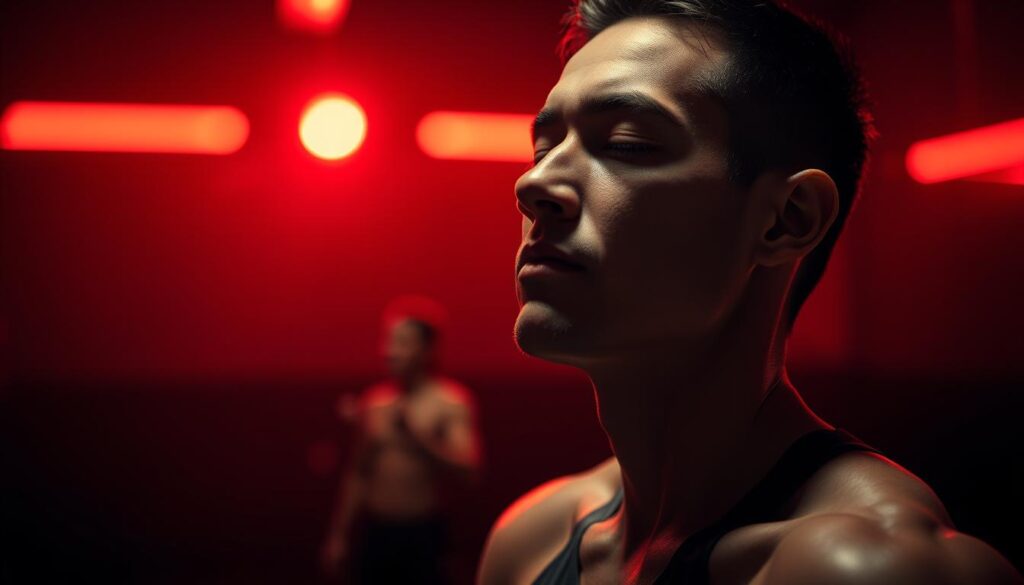
How Visualization Works in Your Brain
The power of visualization isn’t just in your head; it’s in your brain’s wiring. When you vividly imagine an athletic move, your brain uses many of the same pathways as when you actually do it. This is why visualization can improve your physical performance even without physical practice.
Brain scans show that mental practice can strengthen brain connections, basically creating mental maps for movements. This helps build muscle memory, improve coordination, and make your reactions faster. Studies prove that athletes who combine physical practice with visualization get better results than those who only do physical practice.
Also, visualization activates your brain’s reticular activating system (RAS). This part of your brain filters information and highlights important details. By repeatedly visualizing success, you’re training your RAS to spot chances and solutions during a real performance that match what you’ve imagined.
Types of Visualization Techniques
Athletes can use different visualization methods to improve their performance. The three most effective ones are: outcome visualization, process visualization, and healing visualization. Each helps in its own way.
Outcome Visualization
This is imagining the successful end result of your performance. Think about crossing the finish line first, making that perfect shot, or standing on the podium with a medal. The main idea here is the achievement and the great feelings that come with success.
To do it well:
- Clearly picture your goal.
- Feel the emotions: pride, joy, satisfaction.
- Add sensory details: the crowd cheering, the weight of a medal.
- Imagine it from your own eyes (first-person view) for the best effect.
This helps build confidence and motivation. By “experiencing” success in your mind, you start to believe you can achieve it in real life. Many Olympic athletes have imagined their victory ceremonies years before they happened.
Process Visualization
Unlike outcome visualization, this focuses on the technical steps and the feeling of doing skills correctly. You mentally practice the exact movements, techniques, and game plans needed for a good performance.
Good process visualization includes:
- Breaking down complex moves into smaller parts.
- Feeling your muscles work and your body positions precisely.
- Focusing on how you do the skill, not just the final score.
- Practicing making smart decisions during competition.
This is super helpful for learning and refining skills. Studies show that mentally practicing technical moves can improve how well you learn and do them. Coaches often use this in practice to help athletes focus on proper technique.
Healing Visualization
This uses the mind-body connection to help you recover from injuries or tiredness. You use mental images to support healing, manage pain, and stay positive while you recover.
To do it:
- Imagine more blood flowing to injured areas.
- Picture your body repairing damaged tissues.
- See yourself returning to full strength and performance.
- Create mental images that fight pain or discomfort.
Studies show that athletes who use healing visualization often recover faster and feel less pain during rehab. This works by lowering stress hormones that can slow healing and possibly by increasing blood flow to injured areas.
Adding these visualization techniques to your training doesn’t need special gear—just consistent practice. Many top athletes spend 10-15 minutes daily on visualization, treating it as important as their physical training.
I never hit a shot… without having a very sharp, in-focus picture of it in my head. It’s like a color movie.
The great thing about visualization is that anyone can do it, anywhere, with no equipment. It offers benefits to athletes at all levels. Whether you play sports for fun or aim for the Olympics, building these mental skills can boost your performance in ways that physical training alone can’t.
How Red Light and Visualization Elevate Your Training: Pre-Game Preparation
Using red light therapy and visualization before you train can make a huge difference! This “pre-game” strategy gets your body and mind ready, leading to better performance, sharper focus, and less risk of injury.
Why Pre-Training Preparation Matters
The moments before you start working out are very important, but many athletes miss this chance. Good pre-workout prep does more than just warm up your muscles; it gets your whole body ready for peak performance. Your body needs to be “primed,” and your mind needs to be focused.
Studies show that athletes who do structured pre-training routines perform up to 20% better than those who just jump right in. This prep time helps your nervous system get going, your energy systems prepare for demands, and your mind get into the right zone.
Combining physical and mental prep creates a state called “readiness potential.” This means your body and mind are perfectly aligned for what’s next. That’s where red light therapy and visualization make a big impact.
Red Light Before You Train
Using red light therapy before training offers clear benefits that can boost your workout quality. Unlike using it after a workout for recovery, pre-workout red light therapy gets your tissues ready to perform at their best.
Prime Your Muscles
Red light therapy activates your muscles at a cell level even before you warm up. The light penetrates your muscle tissue, telling your cells’ energy factories (mitochondria) to make more ATP (your body’s main energy).
This energy boost gets your muscles ready by increasing blood flow and oxygen. Athletes say they feel more responsive and “switched on” after using red light before a workout. Your muscles can generate power more effectively when their energy systems are already revved up.
A 2018 study found that athletes who used red light therapy before strength training could do 3-5 more reps before tiring out.
Boost Your Warm-Up
Red light therapy enhances your physical warm-up by preparing tissues deep down at the cell level. While traditional warm-ups increase blood flow and temperature, red light therapy goes deeper, boosting cell function and getting nutrients to your muscles faster.
This two-part warm-up (movement + cell activation) gives you a more thorough preparation. The increased blood flow from red light therapy helps deliver oxygen and nutrients to muscles quicker, while also efficiently removing waste products during your workout.
For best results, use red light therapy on your target areas for 5-10 minutes before your regular dynamic warm-up.
Prevent Injury
One of the most valuable pre-workout benefits of red light therapy is reducing injury risk. By increasing blood flow to tough tissues like tendons and ligaments, red light therapy makes them more flexible and strong before you put stress on them.
This is especially helpful if you’ve had past injuries or are getting back to training. It helps strengthen weak spots and improves joint movement before activity. Many physical therapists now suggest pre-workout red light therapy as part of injury recovery.
Athletes in intense sports like sprinting, basketball, and football have reported fewer muscle strains when they use red light therapy before games or practices, especially for explosive movements.
Visualize for Mental Edge
While red light therapy preps your body, visualization preps your mind – and that mind-body connection is key for sports performance. Before a workout, visualization helps in several ways that perfectly complement the physical benefits of red light therapy.
Good pre-performance visualization calms your nerves by making your brain familiar with the challenges ahead. When you mentally practice movements and scenarios, your nervous system builds pathways that make those actions feel more natural when you do them for real.
Sports psychology research shows that athletes who visualize success before competition have lower stress hormones and higher confidence. This mental prep creates “mental readiness,” where you’re more focused and less distracted.
To get the most out of it, your pre-workout visualization should use all your senses: see yourself performing perfectly, feel your muscles, hear the sounds around you, and experience the emotions of success. This multi-sensory approach activates more of your brain and builds stronger connections.
Your Step-by-Step Pre-Game Plan
Here’s how to use both red light therapy and visualization before your training for the best results:
- 30-40 minutes before: Do a 10-15 minute red light therapy session on your main working muscles and any sensitive areas. Keep the light 6-12 inches from your skin.
- 20-25 minutes before: Spend 5 minutes visualizing in a quiet spot. Mentally practice key moves and situations you’ll face during your workout or competition.
- 15-20 minutes before: Start your physical warm-up with light cardio. This uses the cell activation from the red light.
- 5-10 minutes before: Do sport-specific dynamic movements, staying mentally focused from your visualization.
- 1-2 minutes before: Take several deep breaths and quickly revisit your performance visualization to get your mind locked in.
You can adjust this plan based on your time. Even a shorter version—like 5 minutes of red light and 3 minutes of visualization—can significantly improve your prep.
For big competition days or important training sessions, try to follow the full plan. On regular days, you might focus on specific areas or switch between emphasizing physical and mental prep.
The secret to success is consistency. Like any training, the more you do it, the more your body and mind will respond better to these prep cues over time.
Post-Workout Recovery Synergy
The moments right after your workout are a hidden gem for boosting your performance. When you wisely use red light therapy and visualization, you unlock a powerful recovery process. What you do after training is just as important as the training itself for long-term success.
The Golden Recovery Time
Sports scientists call the 30-60 minutes right after exercise the critical recovery window. During this time, your body is super ready to accept anything that helps it heal and adapt faster.
In this window, blood flow to muscles increases, cells become more sensitive, and hormones kick in to get your body ready to recover. If you don’t take advantage of this time, you could end up with longer soreness, slower recovery, and ultimately, fewer gains.
Studies show that athletes who follow a structured recovery plan during this window recover up to 20% faster. It’s not just about feeling better sooner; it’s about setting up your body for continuous improvement.
Red Light Therapy Helps You Recover
Red light therapy (RLT) offers big benefits after your workout. When used smartly after exercise, it works at the cell level to boost your body’s natural recovery processes.
The main reason RLT helps with muscle recovery is that it boosts your cells’ powerhouses, the mitochondria. When exposed to specific red and near-infrared light, these powerhouses make more ATP (your body’s main energy currency), which is vital for repair.
Studies show that using RLT after a workout can increase protein building by up to 25%, which speeds up the repair of tiny muscle tears from exercise. This means less recovery time between workouts and potentially being able to train harder over time.
Athletes who use RLT consistently report getting back to high-intensity training quicker, with many seeing clear improvements after just 2-3 weeks of regular use.
Less Swelling
Some inflammation is normal after a workout, but too much can slow down recovery and make you more sore. RLT helps control this, giving you a balanced approach to post-workout inflammation.
RLT works by affecting chemicals that manage inflammation and by improving the flow of fluids that clear out waste products. This helps keep the good parts of inflammation while stopping it from getting out of control.
For athletes doing really tough training, managing inflammation with RLT can mean the difference between sticking to your schedule and being sidelined by soreness.
Better Sleep
One often-overlooked benefit of RLT is how it improves sleep. When used in the evening after training, red light can help your body make melatonin (the sleep hormone) and improve your overall sleep quality.
Better sleep directly leads to better recovery because most physical repair happens during deep sleep. Athletes using RLT in the evening report falling asleep faster, waking up less often, and feeling more refreshed.
This improved sleep creates a cycle: better sleep leads to better recovery, which means more effective training, which then helps your body adapt and perform even better.
Visualization for Your Mind’s Recovery
While RLT handles the physical side of recovery, visualization helps your mind recover, which is just as important. The time after your workout is a perfect chance to process your training and get your mind ready for future challenges.
Effective post-workout visualization does a few things. First, it helps lower stress hormones that can stay high after intense exercise. By imagining relaxing scenes, athletes can help their bodies switch back to “rest and digest” mode faster.
Second, visualization lets athletes mentally review and strengthen the skills they just practiced. This mental rehearsal helps build stronger brain pathways for movements, essentially continuing the training even after the physical part is done.
A simple 5-10 minute visualization after training can include:
- Thinking about the good parts of your workout.
- Mentally fixing any mistakes or challenges.
- Imagining perfect execution in future performances.
- Focusing on feelings of recovery, renewal, and growth.
Your Post-Workout Plan
To get the most out of your post-workout recovery, it’s key to smartly combine red light therapy and visualization. Start your recovery plan within 30 minutes of finishing your workout to take advantage of that critical window.
Here’s a simple guide for your post-workout recovery, depending on how hard you trained:
| Training Intensity | Red Light Therapy Duration | Visualization Focus | Hydration/Nutrition | Total Recovery Time |
|---|---|---|---|---|
| Light (Recovery Day) | 5-10 minutes | Relaxation, body awareness | Hydration focus, light protein | 15-20 minutes |
| Moderate (Standard Training) | 10-15 minutes | Skill reinforcement, recovery imagery | Protein/carb mix, electrolytes | 25-30 minutes |
| High (Intense Training) | 15-20 minutes | Deep recovery, positive adaptation | Complete recovery nutrition | 35-45 minutes |
| Maximum (Competition/Testing) | 20-30 minutes | Performance review, emotional processing | Comprehensive refueling strategy | 45-60 minutes |
For the best results, stick to your plan consistently. The benefits of both RLT and visualization grow over time, with the biggest improvements often seen after 4-6 weeks of regular use.
Remember, recovery is personal. Pay attention to how your body responds and adjust the timing, duration, and techniques based on what works best for you and your training demands. The most effective recovery strategy is one you can do regularly and that makes you feel noticeably more ready for your next workout.
How to Actually Use Red Light & Visualization
You know about red light and visualization now, but how do you actually use them? It’s easier than you think! With the right gear, smart timing, and consistent tracking, you can use these tools to boost your athletic performance.
Get the Right Gear
For red light therapy (RLT), picking the right device is very important. Big panels are great for full-body use but can be pricey. Portable devices offer flexibility, and masks work well for smaller areas. When buying, check for optimal wavelengths (630-660nm red, 810-850nm near-infrared), power, FDA clearance, warranty, and reviews from athletes in your sport.
For visualization, resources are usually more affordable. Think guided apps like Headspace or Calm, sport-specific audio programs, books on mindfulness, or even sessions with a sports psychologist for personalized guidance.
Best Times and How Often
Timing is important for both RLT and visualization.
- Pre-workout RLT: Aim for 1-3 hours before training to let your cells get fully energized.
- Post-workout RLT: Use within 2 hours after intense training to speed up recovery and aid injury healing.
For visualization, try to make it a daily habit. You can do 5-10 minutes in the morning to set goals, 10-15 minutes before a workout to visualize perfect moves, 5-10 minutes after training for recovery, and 10-15 minutes in the evening to review and plan improvements.
How often? For RLT, aim for daily 10-20 minute sessions during tough training blocks, or 3-4 times a week for maintenance. For visualization, even 5 minutes of focused mental imagery daily can make a big difference.
Avoid Common Mistakes
Even with the best intentions, it’s easy to stumble. A common mistake with RLT is using the wrong distance—too far, and it’s weak; too close, and you might overdo it. Inconsistent practice is another pitfall; shorter, regular sessions are much better than long, rare ones.
For visualization, many athletes only focus on seeing things, missing out on feeling the movements, hearing sounds, and experiencing emotions, which makes it less effective. Also, don’t expect instant results; it usually takes 2-4 weeks to see significant benefits. Finally, remember that what works for someone else might not be right for you, so always adjust based on your body’s response.
Track Your Progress
To see if these methods are working, you need to track your progress. Keep notes in your training journal. Record things like your training intensity, how fast you recover, your sleep quality, new personal bests, and how often you get injured.
Also, track how you feel on a scale of 1-10 – your focus, confidence, and how hard you perceive your workouts. These personal feelings often show benefits before the numbers do! For injuries, note pain levels and range of motion.
Try using tech like heart rate variability (HRV) monitors to check recovery or performance apps to spot trends.
“What you measure, you improve. Just tracking helps you become aware, and that awareness is the first step to getting better.”
Remember, consistency beats perfection. Adding new things to your routine is challenging, but even imperfect efforts lead to better results than doing nothing. Start small, build habits, and adjust as you learn what works best for you.
The Future of Training is Here
It’s clear that to truly excel in training and competition, you’ve got to connect your mind and body. Red light therapy gives your body a serious edge, boosting energy and speeding up recovery, while visualization sharpens your mental game and builds crucial neural pathways. Together, they create a powerful synergy that goes beyond traditional training.
This isn’t just for elite athletes; it’s a game-changer for anyone looking to level up their fitness. By understanding and consistently applying these methods – from pre-workout priming to post-workout recovery – you’ll unlock your full potential and transform your athletic journey.
Your Top Questions on Red Light Therapy for Training, Answered!
How fast will I see results from red light therapy and visualization?
You’ll likely start feeling benefits in 1-2 weeks! Mental boosts from visualization, like better focus and less pre-game jitters, often show up first. Physical improvements from red light therapy usually kick in after 2-4 weeks, with full benefits taking 8-12 weeks to really shine. How fast you see results depends on how often you use it, your gear, and your body.
Can red light therapy help with injuries?
Yes, definitely! Red light therapy is great for injuries like muscle strains, joint pain, tendonitis, and can even speed up bone healing. It works by calming swelling, boosting blood flow to the injured spot, and helping your cells repair themselves. For the best recovery, start using it quickly after an injury and combine it with your doctor’s care and rehab exercises.
How long should my red light therapy sessions be?
Most sessions should be 10-20 minutes. If you’re using it before a workout, 5-10 minutes is usually enough to get your muscles ready without making them tired. For recovery after a workout, you might go for 15-20 minutes. The best time depends on your device’s power, how far away you are from it, and what you’re trying to achieve. Always start short and slowly increase as your body gets used to it.
Is it better to use red light therapy before or after a workout?
Both times are good! Pre-workout red light therapy helps get your muscles ready, makes your warm-up better, and might even lower your risk of injury. Post-workout sessions speed up recovery, reduce swelling, and help repair muscles. For the best of both worlds, many athletes do shorter sessions (5-10 minutes) before training and longer ones (10-20 minutes) after. If you have to pick just one, after-workout therapy often gives more overall benefits.
What’s the difference between red light therapy and infrared saunas?
They both use light, but they’re not the same! Red light therapy uses specific light wavelengths (red and near-infrared) that go into your body to boost cell function, without making you super hot. It targets specific healing processes. Infrared saunas mostly use far-infrared light to create heat, making you sweat and improving overall circulation. Many athletes use both because they offer different, yet complementary, benefits.