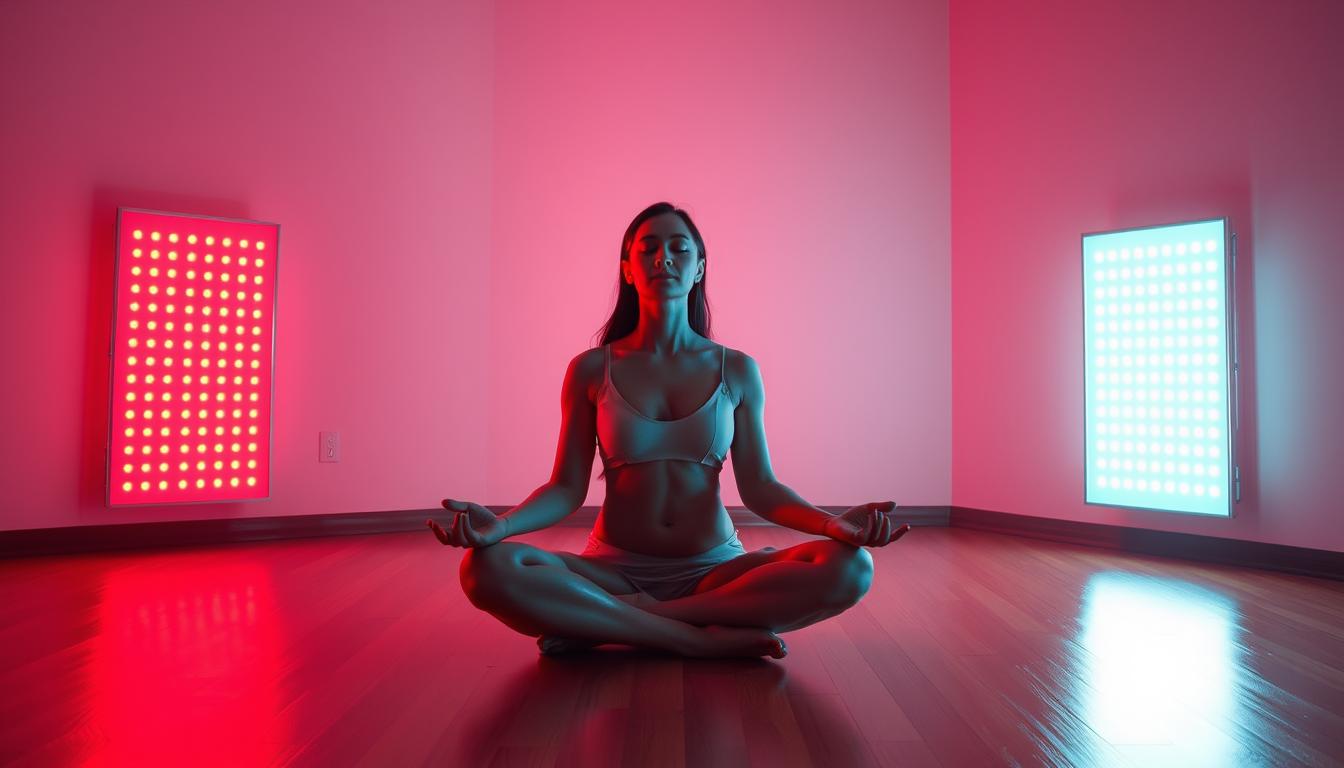
Pairing red light therapy and guided meditation brings a simple, science-backed routine that aims past surface issues and into systemic relief. Red and near-infrared wavelengths support cellular repair, circulation, and ATP production. Guided breath work lowers cortisol and improves heart rate variability, which aids recovery.
Expect clear explanations and practical steps. This guide will cover inflammation basics, how red light and light therapy act at the cellular level, and why calming the nervous system speeds repair. You’ll also see device tips like common wavelengths, pulse options, and session frequency for mild and chronic cases.
Practical placement and breath-led practice can promote alpha and theta brain states linked with focused healing. Safety, realistic timelines, and growing research on photobiomodulation and stress reduction are emphasized. Small, steady sessions often yield the best gains in comfort, sleep, and daily performance.
Key Takeaways
- Combining red light therapy and meditation targets systemic inflammation and supports recovery.
- Red and near-infrared light boost cellular energy and circulation; meditation lowers cortisol.
- Device choice, pulse settings, and placement matter for results and safety.
- Follow consistent sessions and realistic timelines for compounding benefits.
- Track pain, sleep, HRV, and mood to measure progress and fine-tune your plan.
Why Pair Red Light Therapy with Meditation for Inflammation Relief
When breath pacing meets therapeutic red light, the nervous system moves toward balance and recovery. Guided meditation lowers cortisol, eases anxiety, and improves sleep. That shift reduces stress signals that drive chronic inflammation.
At the same time, red light therapy supports cellular energy by boosting ATP and circulation. This helps collagen repair and drops inflammatory markers in tissues.
Combine them and you get complementary effects. Meditation reshapes stress perception while red light improves local biochemistry. Together they make it easier to enter alpha and theta brain states that support repair.
- HRV gains: heart-rate variability can improve with consistent practice, showing better nervous-system resilience.
- Pulse options: syncing breath with light pulses (around 60–100 Hz) can deepen focus and make sessions feel immersive.
- Practical relief: local exposure plus whole-mind calm often speeds pain, sleep, and mood improvements.
Early research and real-world reports show safety and steady gains when therapy is used regularly at home. This pairing is a gentle, drug‑sparing path toward lasting relief.
Understanding Inflammation: From Acute Protection to Chronic Disruption
Inflammation is a protective alarm that helps the body repair after injury, but it can become harmful when it stays active.
Acute inflammation supports short-term repair. It brings blood, immune cells, and nutrients to injured tissue. That process helps recovery and limits infection.
Chronic inflammation happens when triggers pile up: unresolved injuries, poor sleep, a pro-inflammatory diet, toxins, stress, and inactivity. Over time, this low-grade response strains organs and joints and raises risk for arthritis and cardiovascular disease.

How oxidative stress drives low-grade, systemic inflammation
Oxidative stress begins when free radicals outpace antioxidants. Cells and mitochondria suffer damage, and that damage keeps immune signaling active. This reduced cellular function worsens systemic inflammation and can slow recovery.
- Triggers: unresolved injury, poor sleep, toxins, and smoking accumulate silently.
- Risks: chronic inflammation links to joint disease, metabolic and heart conditions.
- Short-term help: NSAIDs may ease pain but carry GI, kidney, liver, and cardiovascular risks with long use.
| Feature | Acute | Chronic | Supportive approach |
|---|---|---|---|
| Purpose | Repair and defend | Persistent, damaging | Resolve cause; restore balance |
| Common triggers | Injury, infection | Poor sleep, diet, stress, toxins | Lifestyle change and monitoring |
| Cellular driver | Immune activation | Oxidative stress, mitochondrial dysfunction | Therapies that aid mitochondria, circulation, and stress balance |
Recovery requires addressing root causes, not just masking symptoms. Nervous-system regulation plays a key role in inflammatory tone. Combining movement, sleep hygiene, anti-inflammatory nutrition, and stress skills helps any therapy work better.
Next, studies and research will show how light therapy plus stress reduction can act at both cellular and system levels.
Red Light Therapy at the Cellular Level: How Light Lowers Inflammation
Targeted red and near-infrared exposure acts directly on cellular powerhouses to improve recovery.
Mitochondria, ATP production, and improved cellular energy
Red light therapy delivers 600–700 nm red and 800–900 nm near-infrared wavelengths. Mitochondria absorb these bands and ramp up ATP production. That extra energy helps cells repair membranes and regulate immune signals.
Reducing inflammatory markers and supporting circulation
Light therapy improves microcirculation, bringing oxygen and nutrients while clearing waste. Clinical reports show lower inflammatory markers, less soreness, and quicker muscle and joint recovery after exertion or injury.
Red and near-infrared wavelengths: penetration depth and targets
Red light mainly affects skin and superficial tissues. Near-infrared light penetrates deeper into muscle and joint structures. Collagen production also rises, helping connective tissue rebuild.
- Dosage matters: intensity, distance, and session length must meet biological thresholds without overload.
- Consistency: repeated use accumulates benefits, shifting tissue from a pro-inflammatory state toward repair.
- Systemic reach: local illumination can trigger wider body effects via circulation and neuroimmune links, an observation noted by Dr. Michael Hamblin.
Meditation’s Healing Effects: Calming Cortisol, Boosting HRV, Enhancing Repair
Guided practice lowers cortisol and eases anxiety, which cuts a major driver of chronic inflammation.
Lower stress hormones and better sleep for downstream inflammation control
Calming routines improve sleep quality and sleep architecture. Better rest reduces systemic inflammation and gives you more energy the next day.
Neuroplasticity and reduced oxidative stress through regular practice
Regular attention training reshapes circuits for focus and emotional control. Over weeks, this rewiring helps you react less and recover faster.
Emerging studies link steady practice with lower oxidative stress, which complements cellular therapy and light support during repair.
- HRV gains: consistent short sessions raise heart-rate variability, a simple signal of autonomic balance.
- Simple habits: breath pacing, a five-minute body scan, or guided audio make practice easy and repeatable.
- Measured results: calmer evenings, fewer pain spikes, and steadier recovery trends over weeks.
| Target | Short term (1–4 weeks) | Medium term (1–3 months) | Notes |
|---|---|---|---|
| Cortisol | Lowered | Stabilized | Guided sessions reduce spikes during stress |
| HRV | Small rise | Notable improvement | Track with wearable |
| Oxidative stress | Modest drop | Greater reduction | Supports cellular recovery when paired with light |
Practical tip: add a short practice before or after therapy sessions to stack habits and deepen relaxation. Measurable benefits include calmer evenings and steadier recovery patterns.
Synergy in Action: How RLT Enhances the Impact of Meditation
Coordinating focused breath and therapeutic light often helps people settle faster into deep relaxation. That faster shift can support alpha and theta brainwaves associated with calm focus and restorative states.
Alpha/theta brainwave support, relaxation response, and HRV
When red light sits alongside guided breathing, mind and body sync more quickly. Users report deeper, earlier alpha/theta waves and better heart-rate variability. Improved HRV shows a stronger parasympathetic response and steadier recovery.
Strategic light placement: chest, stomach, and forehead considerations
Place panels over the chest or stomach to support diaphragmatic breathing and emotional release during practice. Forehead exposure helps sessions aimed at clarity and attention. Keep distance comfortable and follow device safety notes.
Systemic effects: local light, whole‑body benefits
Local illumination often creates wider changes. Studies and commentary from experts like Dr. Michael Hamblin note that focused application can shift circulation and neuroimmune signaling across the body.
- Sync pulses (up to 100 Hz) with breath to anchor attention and deepen calm.
- Try light before or during meditation to find which order feels best.
- Consistent pairing builds a conditioned relaxation response and boosts long-term benefits for repair and stress patterns.
Beyond the Skin: Using RLT + Meditation to Target Deeper Inflammation
Tendons, joints, and deep muscle layers often need more than topical care. Near-infrared penetration from red light and steady breath practice work together. This combo eases stiffness and calms the nervous system that amplifies pain.
Red light therapy can reduce inflammatory markers and help with tendonitis, post-exercise soreness, and surgical recovery. Paired practice lowers sympathetic tone and reduces muscle guarding, improving range of motion.
Practical benefits and safer pain management
Daily NSAIDs carry GI, kidney, liver, and cardiovascular side effects. Regular sessions of light therapy plus calming practice can cut reliance on pills for many people.
| Use case | What light does | What practice adds |
|---|---|---|
| Morning stiffness | Near-infrared warms and reduces stiffness | Breath-led stretching eases movement |
| Post-workout soreness | Speeds cellular repair | Reduces pain amplification |
| Overuse flare-ups | Targets deep tissue inflammation | Stabilizes autonomic response |
Start frequent during flares, then move to maintenance. Track pain scores, range of motion, and post-activity soreness. This non-invasive approach is gentle enough for daily use when dosed properly and paired with light mobility work.
Build Your Session: A Step‑by‑Step Protocol You Can Follow Today
Begin each session by arranging your gear and calming your space so the work feels simple and sustainable.
Set up your light therapy device and environment
Position the light therapy device at the manufacturer’s recommended distance for even coverage of your target area. Dimming room lights, silencing notifications, and setting a comfortable temperature reduces sensory load.
Breath pacing, body scanning, and timing with light exposure
Start with a 2–3 minute settling phase of slow nasal breathing. Move into a brief body scan as you switch on the panel.
“Slow, steady breath helps anchor attention and lets the body accept gentle repair.”
Suggested durations, pulse ranges, and weekly frequency
Use 10–15 minutes per area to start. For chronic issues, progress to 15–20 minutes as tolerated. Pulse up to 60–100 Hz to help pacing and relaxation.
Progressing from relief to maintenance for best results
Practical guidance: 3–4 sessions per week for mild issues, daily 10–20 minutes for significant discomfort, then taper to 1–2 sessions weekly for maintenance.
| Step | Action | Why it helps |
|---|---|---|
| Setup | Place device per guide; dim lights | Comfort and even coverage |
| Practice | 2–3 min settle, body scan, paced breath | Lower cortisol, better focus |
| Routine | 10–20 min; 3–7x/week depending on need | Consistent dosing beats irregular long sessions |
Finish with 1–2 minutes quiet rest, journal pain, sleep, and mood, then re‑enter activity slowly for better long‑term recovery and benefits.
Choosing the Right Light Therapy Device and Settings
Picking the right panel or wrap makes a big difference in comfort, coverage, and long-term adherence. Your choice should balance wavelengths, intensity, and how you plan to use the unit daily.
Wavelengths that matter
Red in the 600–700 nm range and near-infrared light at 800–900 nm are prioritized because they hit different tissue depths. Red light works well for superficial repair, while near-infrared light reaches muscle and joint layers for deeper recovery.
Intensity, coverage, and comfort
Intensity must be strong enough for tissue depth but not so high it causes discomfort. Follow your device instructions for distance and session length.
Comfort matters: choose a setup you can keep for 10–20 minutes to ensure consistent therapy.
Targeted wraps versus larger panels
Large panels suit whole-body conditioning and systemic effects. Wraps or small panels fit joints, neck, and focused treatments and are more portable.
- App control and pulse modulation let you adjust frequency up to ~100 Hz for relaxation and adherence.
- Quiet fans, low glare, and stable stands improve the user experience.
- Test distances and placements to find a sweet spot for comfort and perceived effects.
| Feature | Best for | Why it matters |
|---|---|---|
| Large panel | Whole body | Broader coverage for systemic therapy |
| Wraps/small panel | Joints, neck | Focused dosing and portability |
| App/pulse | Personalization | Better adherence and tailored sessions |
“The best device is the one you will use consistently.”
Goal‑Based Playbooks: Pain, Skin, Sleep, and Recovery
Build a playbook that matches session timing and placement to your main concern—pain, skin, sleep, or sport recovery. Pick a simple routine and adjust it across days based on how you feel.
For pain and chronic inflammation: aim morning or post-activity sessions over sore joints or muscles. Keep each session 10–20 minutes and pair it with slow nasal breathing. Add gentle stretching or yoga on recovery days to boost circulation and healing.
For skin and collagen support: use brief facial red exposure at the recommended distance. Follow with a short breathing practice to calm stress that worsens flare-ups. Consistent, repeat use over weeks supports firmness and micro‑damage recovery.
For sleep and stress: schedule soft evening sessions with dim light and a guided breath routine. Keep sessions brief so you avoid overstimulation before bed. This cues the parasympathetic system and can cut sleep latency.
| Goal | Timing | Session | Weekly plan |
|---|---|---|---|
| Pain / chronic inflammation | Morning or post-activity | 10–20 min over target; slow breathing; light stretch | 4–6x/week during flares; taper to 2x/week |
| Skin / collagen | Any consistent time; avoid bright evening sessions | 5–12 min facial exposure; brief meditation | 5–6x/week for several weeks, then maintenance |
| Sleep / stress | 30–60 min before bed | 10–15 min soft light; guided relaxation | 3–7x/week based on sleep goals |
Track outcomes like morning stiffness, breakout frequency, sleep latency, and DOMS. Adjust placement, timing, and frequency based on results. Whole‑body panels can supplement targeted treatments when you want systemic conditioning.
Safety, Side Effects, and Expectations
Safety measures and realistic expectations make therapy easier to use and stick with. Red light therapy is non-invasive and well tolerated by most people. Typical side effects are mild, like a warm feeling or brief redness at the site.
When to check with a clinician: consult a healthcare professional if you are pregnant, have photosensitive conditions, or take photosensitizing medications. Stop sessions and seek advice if you notice unusual pain, blistering, or prolonged redness.
Expect results to build over weeks rather than overnight. Consistent, moderate sessions beat rare long sessions. Many trials and studies report benefits for pain relief, surgical recovery, gum health, and athletic healing when users follow a steady plan.
Practical guidance
- Start conservatively and increase duration as comfort and progress allow.
- Reassess device distance and time if sleep or skin irritation occurs.
- Meditation and breath work carry minimal risk; use supported postures if dizzy.
- Combining modalities can feel stronger at first—scale gradually.
| Concern | Common effect | Action |
|---|---|---|
| Skin warmth | Temporary redness or heat | Reduce time or increase distance |
| Photosensitivity | Heightened reaction | Consult clinician; pause treatment |
| Progress expectation | Slow, cumulative gains | Track pain, sleep, and range of motion |
Tip: long-term adherence and gentle habit stacking are the clearest path to lasting change.
Tracking Progress and Staying Consistent
A few simple markers—pain, sleep, HRV, mood—give reliable feedback on your healing process.
Start small. Note weekly pain intensity, stiffness, and activity tolerance. These scores show whether inflammation and pain are receding.
Watch sleep duration and restfulness alongside occasional HRV snapshots. These indicate nervous-system recovery and help you measure light therapy help.
Simple metrics: pain scores, sleep quality, HRV trends, and mood
Keep a short log with numbers and quick notes. Track mood and stress entries to capture how guided practice affects physical gains.
Stacking habits: hydration, anti‑inflammatory diet, and light exercise
Supportive habits amplify benefits. Hydration, omega‑3 and antioxidant foods, gentle movement, and rest reduce oxidative load and speed tissue repair.
- Choose a consistent time and place for sessions so adherence is easy.
- Increase duration or frequency in small steps rather than large jumps.
- After improvement, use periodic maintenance blocks to consolidate recovery.
- Reassess device placement and comfort as needs change.
Steady tracking lets you tune treatments and get the best results over time.
Conclusion
This pairing brings cell-level repair and nervous-system calm into one practical routine. Red light therapy boosts ATP, circulation, and collagen while guided practice lowers cortisol and improves HRV. These combined effects help reduce inflammation and speed recovery.
Use 600–700 nm and 800–900 nm bands for surface and deeper tissue benefit. Start with short, regular sessions, then tailor pulse, placement, and timing for comfort and results.
Track pain, sleep, HRV, and mood. With sensible dosing and clinician guidance when needed, this home-friendly approach offers steady healing and lasting relief. Put the step-by-step protocol into practice today and build a sustainable habit for better recovery over time.